
Whether you're undertaking a sympathetic renovation of a period property, extending a family home or embarking on a whole-house retrofit, improving energy efficiency presents one of the greatest opportunities to add long-term value. The challenge isn't a lack of technology. From high-performance insulation and modern glazing to heat pumps, solar PV and smart heating controls, homeowners have more options than ever before.
The real challenge lies in understanding which measures are right for your property - and in what order they should be introduced.
Why Every Home is Different
Unlike new-build homes, existing properties come with their own unique characteristics and constraints. The age of the building, its construction, existing insulation levels, ventilation and even its orientation can all influence which improvements will deliver the greatest benefit.
While many renovation projects focus on improving how a home looks or functions, retrofit goes a step further by improving how it performs. In reality, the two often go hand in hand, presenting the perfect opportunity to create homes that are warmer, healthier and significantly more energy efficient.
There is rarely a one-size-fits-all solution; what works well in one property may be unsuitable for another. So before investing in new technologies, it's worth taking the time to understand how your home currently performs and identifying where improvements will have the greatest impact.
Start with the Building - Not the Technology
One of the most common mistakes homeowners make is choosing a heating system before addressing how much heat the building actually loses.
The most efficient heating system in the world can't compensate for a home that loses heat through poorly insulated walls, roofs, floors or draughty windows and doors. That's why many renovation professionals advocate a 'fabric first' approach.
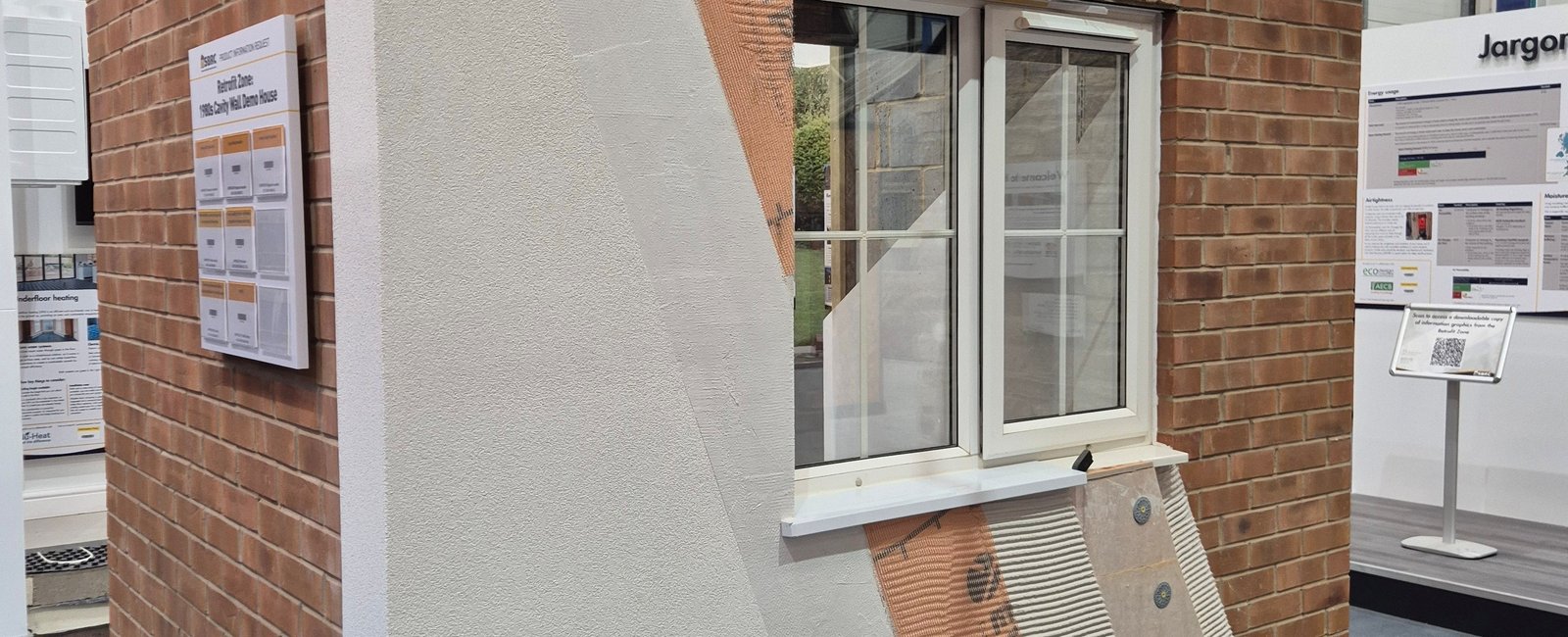
Improving insulation, reducing unwanted air leakage and addressing thermal bridging can dramatically reduce a home's energy demand before any new heating technology is considered. Not only can this improve comfort throughout the year, but it can also reduce ongoing energy costs and, in some cases, allow for a smaller, more efficient heating system to be installed.
Technology should follow the building - not the other way around.
If you'd like to see what a fabric-first approach looks like in practice, the NSBRC's Retrofit Zone features life-size examples of common UK homes, showing how insulation, airtightness and other building improvements can work together to improve energy efficiency before considering heating systems.
Don't Forget Ventilation
As homes become better insulated and more airtight, ventilation becomes increasingly important.
While reducing uncontrolled draughts helps retain warmth, homes still need fresh air to maintain good indoor air quality and control moisture. Without adequate ventilation, condensation and mould can quickly become problems, particularly during colder months.
The right solution will depend on the property and the scope of the renovation. Some homes may benefit from improved natural or background ventilation, while more comprehensive retrofit projects may be suited to Mechanical Ventilation with Heat Recovery (MVHR), which provides a continuous supply of fresh air while recovering heat that would otherwise be lost.
The key is ensuring that insulation, airtightness and ventilation are considered together rather than as separate upgrades.
Choosing the Right Heating System
Once heat loss has been reduced, attention can turn to heating the home as efficiently as possible.
Heat pumps have become an increasingly popular choice, particularly where significant fabric improvements have already been made. However, they are not the answer to every project. In some cases, an existing heating system may still be appropriate, while hybrid solutions or phased upgrades may offer a more practical route depending on the property's condition and the homeowner's budget.
Equally important are the systems that help manage energy use. Smart heating controls, zoning and well-designed emitters, such as underfloor heating where appropriate, can all improve efficiency and comfort.
Rather than asking, "What's the best heating system?", homeowners should instead ask, "What's the right heating system for my home?"
Generating and Managing Your Own Energy
Once a home's energy demand has been reduced, generating your own renewable energy becomes an attractive next step.
Solar photovoltaic (PV) panels remain one of the most accessible technologies for homeowners looking to reduce electricity costs, while battery storage can help maximise the use of energy generated throughout the day. For those considering an electric vehicle, planning for EV charging infrastructure during a renovation can also prove a worthwhile investment.
These technologies are often most effective when viewed as part of a wider energy strategy, rather than standalone additions. Successful renovation isn't about adding more products; it's about making every part of the home work together.
A Whole-House Approach Delivers Better Results
Perhaps the most important lesson for anyone planning a renovation or retrofit is that a home should be viewed as a system, not a collection of individual upgrades.
Improving one element without considering the others can sometimes create unintended consequences. Better insulation without appropriate ventilation, for example, may lead to condensation issues. Installing a heat pump before reducing heat loss may limit its effectiveness. Even seemingly straightforward improvements can affect how the rest of the building performs.
Taking a whole-house approach allows homeowners to prioritise improvements, phase work sensibly where budgets require and avoid costly mistakes. Often, the biggest energy savings don't come from the most expensive technology - they come from making informed decisions in the right order.
The best energy-efficiency upgrade isn't a product - it's a plan.
Learning Before You Build
Every renovation project is different, but one thing remains consistent: informed homeowners make better decisions.
Investing time in understanding your property, the available technologies and how they work together can save significant time, money and stress later in the project. Independent advice is invaluable in helping homeowners cut through conflicting information and choose solutions that genuinely suit their home, lifestyle and budget.
Successful renovation and retrofit projects aren't defined by how many technologies they include, but by how well those technologies work together. By taking a whole-house approach and sequencing improvements carefully, homeowners can create properties that are warmer, healthier, more comfortable and cheaper to run for years to come.
If you're looking to build your knowledge before work begins, the National Self Build & Renovation Centre's Renovation Workshop is the ideal place to start. Designed for anyone planning a renovation, extension or whole-house retrofit, the workshop offers practical, impartial guidance covering everything from planning and budgeting through to building performance and energy efficiency. You'll also have the opportunity to explore the Centre's life-sized Renovation House and Retrofit Zone, helping you visualise the stages of a successful project and understand how different measures work together in practice.